

In this series of Global Keys Asia (“GKA”) Market Briefing, we will share our take and strategy on these markets – Singapore, Malaysia, Thailand, Hong Kong & China.
Asia’s property markets are diverging in 2026 and for the past two years, regional investors painted Asian real estate with a single brush: “wait and see.” That era is over. As we move through mid-way in 2026, the five major markets GKA track most closely — Singapore, Malaysia, Thailand, Hong Kong, and China — are no longer moving in sync. Each is now telling its own story, and each demands its own strategy.
Below, we break down what’s actually happening on the ground, and what it means for your next move.
Singapore: From Broad Growth to Precision Plays
The trend: Singapore’s economy is cooling from 2025’s blistering 4.8% growth to a projected 1–3% in 2026, yet the property market remains remarkably resilient. Lower interest rates and improved liquidity have pushed Singapore back into the top three investment destinations in Asia-Pacific this year. Private home prices are expected to climb at a measured 2–5% (forecasts vary by agency), while the Outside Central Region — particularly Lentor and Tengah, with over 8,300 new units launching — is seeing a genuine “first-mover” rush as the price gap with the Core Central Region narrows.
GKA take: The headline isn’t growth — it’s differentiation. Office assets in the Core CBD are pulling decisively ahead of older buildings as tenants chase quality, meaning landlords with aging stock face real repricing risk, not just slower appreciation. On the residential side, ABSD remains the single biggest variable in any return calculation, and 2026 is shaping up to be a year where tax-efficient structuring matters more than the underlying property pick.
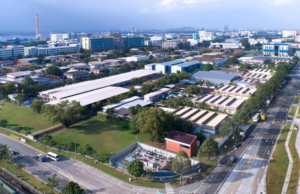
GKA investment strategy: Favour industrial as there is no ABSD. Grade-A CBD office and new-launch OCR/EC projects tied to MRT expansion (Thomson-East Coast Line corridor, Greater Southern Waterfront), but only after running the deal through a proper ABSD and holding-period tax model. In this market, the win is in the structuring, not just the selection.
Malaysia: The Johor-Singapore Special Economic Zone Is the Story
The trend: Malaysia’s national house price index has been growing a modest 1–3% annually — essentially flat in real terms — but that’s not bad news for cashflow-focused investors, as it keeps entry prices reasonable while yields in Kuala Lumpur, Johor Bahru, and Penang hold at an attractive 4–6%. The real action is in Johor: the JS-SEZ alone attracted RM110 billion in approved investments in 2025, the highest of any Malaysian state on record, and a US$34 billion data centre wave is pushing Johor toward 1 gigawatt of capacity by year-end. Industrial and logistics property is now one of the most sought-after asset classes in the country.
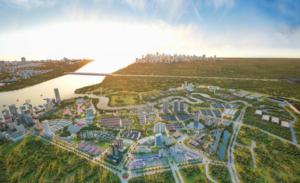
GKA take: Malaysia’s 2026 Budget cuts both ways — it extends stamp duty relief for first-time local buyers while raising stamp duty for foreign purchasers, particularly hitting the luxury segment. For foreign investors, this means the speculative “buy and flip” playbook is fading. What’s replacing it is a structural, infrastructure-led thesis centered on the Johor-Singapore corridor, where the RTS Link and SEZ-driven manufacturing and data centre demand are creating genuine, sustained occupier demand — not just developer hype.
GKA investment strategy: Favor industrial, logistics, and built-to-suit assets in the JS-SEZ corridor over speculative residential plays. For residential exposure, anchor in the RM1M segment near MRT3 and transit nodes, and treat this as a yield play first, capital appreciation second.

Thailand: Bangkok Cools, Phuket Heats Up
The trend: Thailand’s residential market is bifurcating sharply. Bangkok’s condo segment remains a buyer’s market, weighed down by years of oversupply that have suppressed effective price growth despite steady demand from Chinese buyers (who now account for over 15% of quarterly transaction value). Meanwhile, Phuket has decisively shifted from “holiday speculation” to lifestyle investment, with analysts forecasting 8–10% annual price growth through 2026 — the strongest of any Thai market — and villa rental yields in the 5–8% range.
GKA take: This is the clearest “flight to quality” story in the region. Generic Bangkok condo stock is structurally challenged for the foreseeable future, while branded residences, managed villas, and well-run rental programs in Phuket’s west coast corridor (Laguna, Bang Tao, Cherng Talay) are capturing a buyer profile that wants long-term residency, not just a holiday unit. Separately, the Eastern Economic Corridor is quietly becoming Thailand’s most reliable infrastructure-driven growth engine, fueled by foreign direct investment in advanced manufacturing and logistics.
GKA investment strategy: Avoid generic Bangkok mass-market condo inventory unless deeply discounted or built by reputable companies. Prioritize branded or professionally managed villa investments in Phuket with proven rental-programme track records, and keep an eye on EEC-adjacent industrial and logistics land in Pattaya and Rayong as a diversification play against Bangkok’s oversupply.

Hong Kong: The Synchronized Upturn Nobody Saw Coming
The trend: Hong Kong has delivered nine consecutive months of price gains through February 2026, the strongest transaction pace in nearly five years. The catalyst was the removal of cooling measures combined with sharply reduced stamp duty for homes under HK$4 million — purchases in that segment jumped 34% year-on-year in 2025. Major banks now forecast home prices to rise 5–15% in 2026, and for the first time since 2018, residential prices, Central office rents, and retail sales are all rising together.
GKA take: This synchronized recovery matters beyond Hong Kong’s borders — historically, when Hong Kong’s cycle turns, it has signaled broader shifts in Asian liquidity and capital flows. Mainland Chinese buyers and corporations are central to this rebound, snapping up discounted office assets in Central and driving demand for student-housing conversions. The one note of caution: in February 2026, the government raised stamp duty on ultra-luxury homes above HK$100 million from 4.25% to 6.5%, cooling the very top of the market even as the broader recovery accelerates.
GKA investment strategy: Focus on the sub-HK$8 million mass-to-mid-tier residential segment, which benefits most from reduced transaction costs and the strongest buyer demand. On the commercial side, repriced Central office assets represent a genuine value opportunity as mainland capital re-enters. Steer clear of the ultra-luxury tier, where the new stamp duty has materially changed the math.

China: Selective Stabilization, Not a Broad Recovery
The trend: China’s residential correction is still running its course. Primary home sales are projected to decline 10–14% in 2026, with inventory sitting roughly 45% above pre-downturn levels. Beijing’s policy stance remains deliberately “support, not stimulus” — gradual easing rather than aggressive rescue. The divergence by city tier is stark: Shanghai is the standout exception, with new-home prices still rising year-on-year on resilient demand for core-location projects, while lower-tier cities continue to face meaningful price pressure.
GKA take: Treat 2026 as a stabilization year, not a recovery year — most analysts don’t expect a genuine upcycle until 2027. That said, “broadly weak” masks real pockets of strength. Commercial real estate and logistics assets are quietly attracting selective investor interest even as residential struggles, and Tier-1 cities — Shanghai in particular — are pulling further away from the national trend.
GKA investment strategy: This is a market for patient, highly selective capital only. Limit exposure to core Tier-1 assets (Shanghai above all), and consider commercial and logistics plays as a hedge against the residential overhang. Broad-based residential exposure in Tier-2/3 cities remains a 2027-or-later thesis at best.

The Regional Read: Five Markets, Five Different Plays
What ties these markets together in 2026 is precisely that they no longer move together. Singapore rewards precision and tax structuring. Malaysia rewards infrastructure conviction in the JS-SEZ corridor. Thailand rewards a flight to quality away from oversupplied Bangkok stock. Hong Kong rewards speed, as a rare synchronized upturn unfolds in real time. China rewards patience and extreme selectivity.
For investors with capital to deploy across the region, this divergence is an opportunity — but only with market-specific intelligence, not a one-size-fits-all regional thesis.
Let’s Talk About Your Next Move
Every market above has windows that are open right now and others that are closing fast. Whether you’re evaluating a Johor industrial asset, a Phuket branded villa, a Hong Kong office repricing opportunity, or simply trying to work out where your capital is best deployed across Singapore, Malaysia, Thailand, Hong Kong, and China — GKA can help you cut through the noise with on-the-ground insight and deal access across all five markets.
Contact our team today for a personalized consultation and discover which of these opportunities fits your investment goals.
Disclaimer: This article is for informational purposes only and does not constitute financial or investment advice. Property markets carry risk, and past performance is not indicative of future results.
Quick Links