

Most investors are still watching interest rates.
The smart money is watching the coastline.
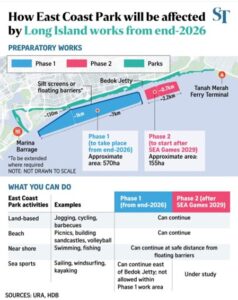
On 30 June 2026, Singapore’s Urban Redevelopment Authority (URA) and Housing Development Board (HDB) jointly announced that preparatory works for ‘Long Island’ — Singapore’s most ambitious coastal protection and land reclamation project in decades — will commence before the end of 2026. The works begin in the waters west of Bedok Jetty, with the quiet but unmistakable signal that one of the last truly underpriced corridors in Singapore is about to enter a multi-decade government-backed transformation.
At Global Keys Asia, we’ve been tracking this story since the early feasibility studies began. Here’s our unfiltered read on what it means for property investors right now.
What Is Long Island? The Full Picture.
Long Island is Singapore’s large-scale coastal protection and land reclamation strategy along the country’s southern East Coast. The numbers alone signal the scale of ambition:
- 800 hectares of new reclaimed land
- 20 kilometres of new waterfront
- Part of a continuous 120-kilometre accessible waterfront stretch along Singapore’s southern coast
- A future reservoir protected by two centralised barrages and pumping stations — functionally the next Marina Barrage, but for the East Coast
- Managed and led by HDB as the appointed reclamation agent, backed by URA and national planning
This is not a speculative project. It is a climate adaptation necessity. High tide is already causing water to backflow into East Coast Park in 2026 — documented with photographic evidence by the National Parks Board. The government cannot afford not to do this. That irreversibility is precisely what makes it such a compelling investment backdrop.
The Phasing — And Why It Matters for Investors
The project is phased, and understanding that phasing is central to understanding the opportunity.
Phase 1 begins end-2026, covering approximately 570 hectares spanning around 7km in length west of Bedok Jetty, extending up to 1km wide north to south. Works involve the removal of seabed obstructions, construction of temporary sand bunds, and sand infilling — all conducted at least 130 metres from the shoreline, clearly demarcated by silt screens and floating barriers.
Phase 2, covering approximately 155 hectares east of Bedok Jetty, commences only after the 2029 Southeast Asian Games — specifically to preserve the sea space for major international sporting events in the interim.
Main reclamation — the full land profile — comes later, after the completion of technical studies, environmental assessments, and further public engagement. The full project spans several decades.
Why Singapore Has Earned the Benefit of the Doubt
Sceptics of long-timeline government projects often underestimate Singapore’s track record of actually delivering on them.
Marina Bay was open seawater not long ago. Today it is Singapore’s most internationally recognised commercial and lifestyle district, and the single greatest driver of capital appreciation in the history of Singapore residential property.
Punggol was scrubland. Today it is a mature eco-waterway town that transformed northeastern Singapore’s property values.
Jurong Island sits entirely on reclaimed land. It is today one of the world’s top petrochemical hubs.
The East Coast corridor is now on that same runway — and this time, we can see the plan forming in real time, rather than looking back at it in hindsight.
The Investment Case: What the Market Is Missing
Here is the insight the broader market has not yet priced in — and Global Keys Asia believes this represents a rare, time-sensitive opportunity.
- Marine Parade, Bedok, and Siglap Are Sitting Next to a Future Waterfront District
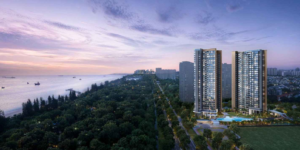
The residential neighbourhoods of Marine Parade, Bedok, and Siglap — Districts 15 and 16 — will eventually be bordered by a brand-new reservoir and world-class waterfront precinct with 20 kilometres of fresh coastal access, green and blue recreational spaces, and public amenities drawn from ideas contributed by more than 14,000 Singaporeans consulted to date.
Current prices in those areas do not fully account for that future.
Non-landed private homes in the Rest of Central Region — which includes the East Coast corridor — have reached a median of roughly S$2,500 per square foot by 2026. Siglap in particular is noted by market analysts as a “lagging” opportunity — the premium for living within a 10-minute walk of a TEL Stage 4 station is currently hovering around 15 to 20%, but Siglap remains behind Katong in pricing in that MRT effect. Add a future waterfront precinct to an already MRT-connected enclave, and the repricing argument becomes compelling.
- The TEL Stage 4 Effect Has Already Started — But Siglap Has Not Finished Catching Up
TEL Stage 4 — comprising stations at Tanjong Rhu, Katong Park, Tanjong Katong, Marine Parade, Marine Terrace, Siglap, and Bayshore — officially opened on 23 June 2024, providing direct rail access to the East Coast region for the first time. The commute from Bayshore to the city centre dropped to under 30 minutes.
Property prices in District 15 saw capital appreciation of approximately 15 to 20% in the five years leading up to the 2024 launch of TEL Stage 4. The rail effect has been real and measurable. Now layer a future 800-hectare waterfront on top of existing MRT connectivity — and the compounding thesis becomes difficult to ignore.
- Bayshore Is Becoming Its Own Precinct
The government’s plan to inject 10,000 new HDB flats and 2,500 private homes into Bayshore will transform this precinct into a vibrant residential town, with a Bayshore Main Street driving commercial demand and new benchmarks for private home launches expected to cross the S$2,800 psf mark by late 2026.
Bayshore sits at the eastern end of the Long Island project footprint. As Long Island’s phasing progresses and the new precinct matures, the geographic and lifestyle value of the entire East Coast corridor strengthens with it.
The Near-Term Trade-Offs: What You Need to Know
Global Keys Asia does not believe in presenting only the upside. Here is the honest near-term picture.
Construction disruption is real. Preparatory works will generate marine vessel activity, intermittent sediment plumes, dust, and noise in the waters off East Coast Park. An Environmental Monitoring and Management Plan will track water quality, suspended sediment levels, noise, and dust throughout — but these are construction works, and they will be visible and present.
Sea sports users will be displaced. Kiteboarding is the most affected activity. Other sea sports face minor to moderate impact depending on location. Agencies are actively working with affected user groups to identify alternative sites east of Bedok Jetty and elsewhere.
The construction period will span years, not weeks. Phase 1 alone covers a 7km stretch. Phase 2 follows after 2029. Main reclamation comes later still. The disruption is not a short-term inconvenience.
But here is the critical insight: the beaches remain open. Jogging and cycling paths stay fully accessible. The works are conducted at least 130 metres offshore. Day-to-day life along East Coast Park continues — and the residential value of the corridor is not diminished by what is happening in the waters beyond the shoreline.
More importantly: the interim period of mixed sentiment is exactly where mispricing happens.
Historically, buyers who move during infrastructure construction phases — when the payoff feels distant and the disruption feels present — are the ones who capture the most value. Marina Bay buyers who committed during the construction years of the 1990s. Punggol buyers who moved in before the waterway was completed. The pattern is consistent: government-backed transformation in Singapore takes time, but it delivers.
This Is Not a One or Two Year Trade
Let us be clear about what Long Island represents as an investment thesis.
This is a 15 to 30 year infrastructure story with an irreversible government commitment behind it. It is backed by URA, HDB, and NParks. It has been shaped by more than 14,000 Singaporeans in public engagement. It has been mandated by the existential reality of rising sea levels already visibly affecting East Coast Park in real time.
The capital appreciation that will eventually be reflected in Marine Parade, Bedok, Siglap, and Bayshore property prices will not happen in the next quarterly market cycle. It will happen over the horizon — in the same way that Marina Bay’s transformation happened over a decade, and Punggol’s over another.
The entry points that make sense are the ones you secure while the broader market is still focused on quarterly price movements and rate decisions.

What Global Keys Asia Is Watching — Our Exclusive View
Based on our analysis of the Long Island announcement, TEL Stage 4 data, URA planning documents, and East Coast market transaction trends, here is where we are focusing attention:
Siglap corridor (District 15): The most undervalued sub-market in the East Coast relative to its infrastructure tailwinds. Already connected by MRT. About to become the neighbour of a future reservoir waterfront. Still trading at a discount to Katong.
Bayshore and the eastern fringe: The Bayshore precinct’s density uplift — 10,000 HDB flats and 2,500 private homes — will create a new demand catchment in a sub-market that currently has limited inventory. New private launch benchmarks above S$2,800 psf are already being discussed.
Landed freehold in Marine Parade and Siglap: Freehold landed property in Districts 15 and 16 rarely comes to market at any point in the cycle. With TEL Stage 4 now operational and Long Island confirmed, holding these assets over a long time horizon is a compelling multi-decade thesis.
Older condo stock in the East Coast corridor: Several older freehold walk-ups in Siglap have not fully priced in either the TEL effect or the Long Island waterfront thesis. These present value-focused entry points for investors seeking capital appreciation without paying a new-launch premium.
Frequently Asked Questions
What is Singapore’s Long Island project? Long Island is Singapore’s large-scale coastal protection and land reclamation initiative along the East Coast. Announced by URA and HDB, it will create 800 hectares of new land, 20 kilometres of new waterfront, and a new reservoir protected by barrages — similar in concept to Marina Barrage — to protect low-lying coastal areas from rising sea levels.
When does the Long Island project begin? Preparatory works commence at end-2026, starting in the waters west of Bedok Jetty. Phase 2 begins after the 2029 Southeast Asian Games. Main reclamation works follow after technical studies are completed, with the full project spanning several decades.
How will Long Island affect East Coast Park? Beaches along East Coast Park remain open throughout preparatory works. Jogging and cycling paths are fully accessible. The works are conducted at least 130 metres offshore, clearly demarcated by silt screens and barriers. Some sea sport users face displacement, with kiteboarding the most affected activity.
Which residential areas benefit most from Long Island? Marine Parade, Bedok, Siglap, and Bayshore are the most directly adjacent residential precincts. All four areas also benefit from TEL Stage 4 MRT connectivity, which opened in June 2024. Siglap is identified as a particularly lagging opportunity given its existing MRT access and future waterfront proximity.
Is now a good time to buy property near Long Island’s corridor? For long-term investors — those with a 10 to 20 year horizon — the construction phase typically represents the best entry window. The market does not fully price in infrastructure that is decades away from completion. That gap between current pricing and future-delivered value is where investment returns are built.
Talk to Global Keys Asia Before the Market Catches Up
Long Island is the biggest single property catalyst to emerge in Singapore’s East Coast corridor in a generation. The announcement is one week old. The mainstream market will take months — possibly years — to fully absorb what it means for adjacent residential values.
Global Keys Asia offers personalised, strategy-first property advisory to investors who want to think clearly about long-horizon opportunities like this one. We don’t chase quarterly market noise. We track the infrastructure, the planning, and the pricing gaps that create real long-term wealth.
If you want to understand which properties and positions in the East Coast and Bedok corridor make sense for your portfolio right now — whether you’re a Singapore-based investor, a family office, or a regional buyer looking to access one of Asia’s most transparent and stable property markets — we have availability for one-on-one consultations.
Contact Global Keys Asia today. The gap between where prices are now and where this waterfront will eventually take them is real. The question is whether you enter while it still exists.
Sources: Urban Redevelopment Authority (URA) press release, 30 June 2026; Housing Development Board (HDB) joint announcement, 30 June 2026; Cushman & Wakefield Southeast Asia Outlook 2026; URA Long Island microsite; PropTiply East Coast market analysis 2026.
Disclaimer: This article is for informational and educational purposes only. It does not constitute financial, legal, or property investment advice. Property markets carry risk and past infrastructure precedents do not guarantee future outcomes.
Quick Links